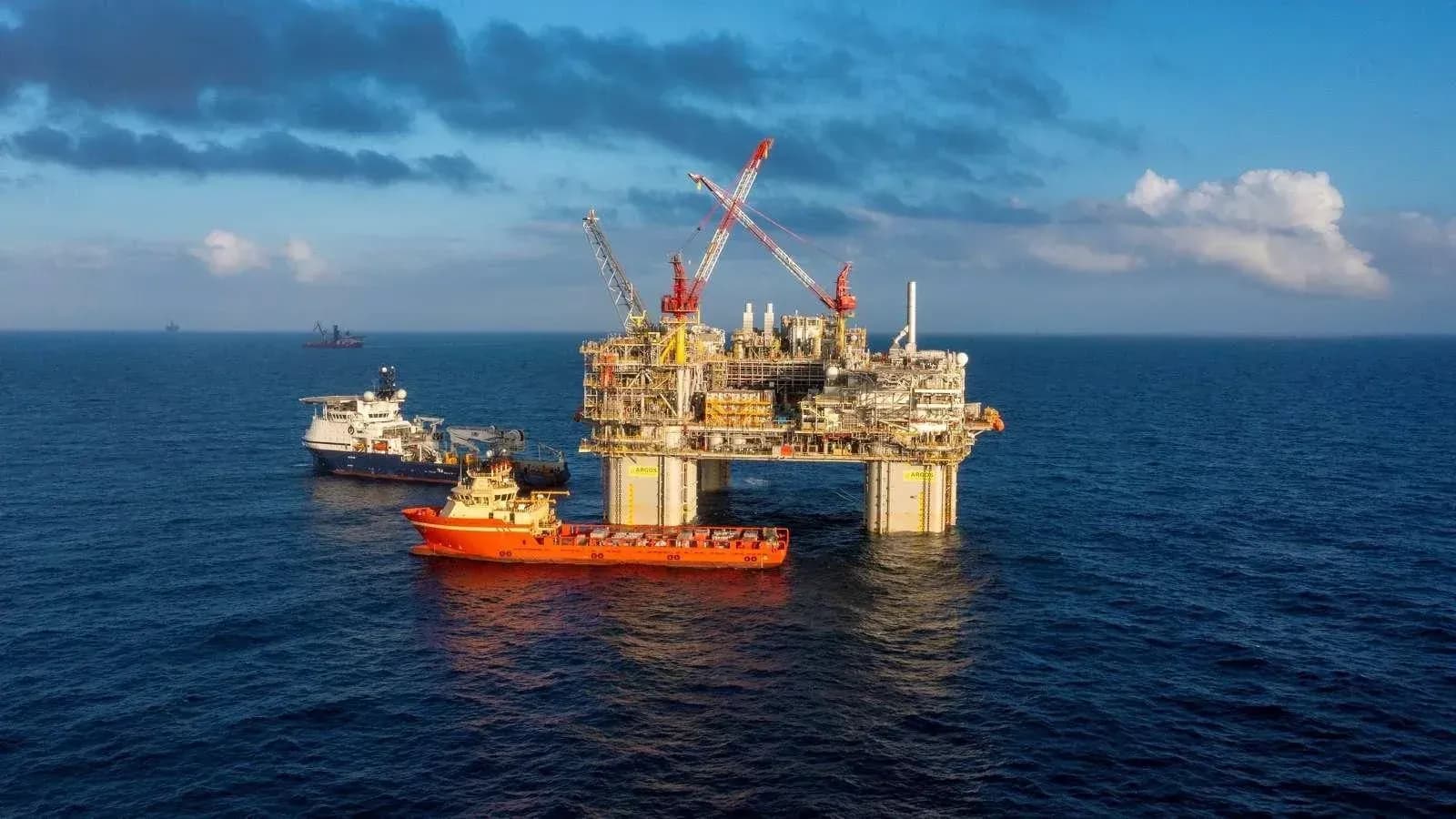
The UK Continental Shelf: Why Well Intervention and P&A Are Critical to the Future of Mature Offshore Assets

As the UK Continental Shelf matures, restoring production, maintaining well integrity and managing decommissioning efficiently are becoming increasingly important. But the next phase of offshore efficiency depends on more than operational technology. It also requires a better understanding of the wells already in place.
A changing offshore production landscape
The UK Continental Shelf (UKCS) is entering a period in which extracting value from existing assets is becoming increasingly important.
Decades of offshore production have created an extensive inventory of wells, production facilities and subsea infrastructure. Many fields are now at advanced stages of their productive lives, while operators face increasing pressure to maintain output, control costs and fulfil long-term decommissioning obligations.
The challenge is no longer simply about finding and developing new resources. It is also about determining how existing wells can continue delivering value through interventions, workovers, production restoration and well-integrity management. Eventually, those same wells must be safely and permanently abandoned.
Although these activities are often managed through separate engineering programmes, they share a fundamental requirement: reliable knowledge of the well’s construction, operational history and present condition.
The UKCS intervention landscape in 2026
According to the North Sea Transition Authority’s (NSTA) 2026 Wells Insights Report, operators carried out 398 well interventions during 2025, compared with 425 in 2024.
The decline in intervention volumes is important. It indicates that operators are becoming more selective about intervention expenditure, rather than simply carrying out more operations.
At the same time, the emphasis of activity is shifting. The NSTA reports that operators increasingly prioritised interventions aimed at restoring production, while undertaking comparatively less surveillance and safeguarding activity.
The results illustrate the value that existing wells can still deliver:
- 56 wells were reinstated during 2025.
- These wells produced approximately 16 million barrels of oil equivalent during the year.
- The reported cost per additional barrel of oil equivalent decreased from £9.60 in 2024 to £7.60 in 2025.
These figures highlight an important characteristic of mature offshore assets: additional production does not always require drilling new wells. In some cases, existing wells can return to production through targeted engineering work, provided their technical condition and commercial potential justify intervention.
The significance of shut-in wells
At the end of 2025, the NSTA reported a UKCS well stock of 2,298 wells, comprising:
- 1,439 operating wells.
- 558 shut-in wells.
- 301 plugged wells within the reported inventory.
The shut-in population represents an important area for ongoing technical evaluation. However, not every shut-in well is suitable for reactivation. Wells may have been suspended because of reservoir depletion, mechanical failures, integrity problems, economic conditions or infrastructure constraints.
Determining whether a well can return to production requires engineers to understand both its present condition and the events that led to suspension. This may involve reviewing completion diagrams, historical pressure tests, previous workovers, equipment replacements, tubing and casing records, and operational reports.
Where these records are fragmented or incomplete, reconstructing the well’s history can become a substantial engineering task before the intervention itself is even planned.
P&A: A growing operational responsibility
While production restoration remains an important focus, decommissioning is an increasingly significant component of UK offshore activity.
The NSTA’s UKCS Decommissioning Cost and Performance Update 2026 reported record decommissioning expenditure of £2.6 billion in 2025. The regulator estimated the remaining UKCS decommissioning programme at £43.4 billion.
These figures cover the broader decommissioning programme, including wells, platforms and subsea infrastructure, rather than well abandonment alone. Nevertheless, plug and abandonment (P&A) represents a technically demanding and essential component of the process.
Before a well can be permanently abandoned, engineers must establish its construction details, identify relevant barriers, understand existing casing and cement configurations, and determine what equipment remains downhole.
For wells drilled several decades ago, this information may be distributed across numerous reports produced by different contractors, operators and engineering teams. Records may include original drilling programmes, final well reports, cementing records, completion diagrams, intervention histories and subsequent integrity assessments.
The quality and accessibility of those records can directly affect the efficiency of engineering preparation.
Intervention and abandonment: Two stages of the same well lifecycle
Well intervention and P&A are often considered separate disciplines. Operationally, this distinction is important. An intervention aimed at restoring production has very different objectives from permanently isolating a well.
However, the underlying engineering information requirements overlap significantly.
An intervention engineer may need to understand a tubing configuration, locate packers, assess previous equipment failures and verify the available well barriers. Years later, a P&A engineer may need many of those same records to understand the well’s architecture and determine the appropriate abandonment approach.
The well’s operational purpose has changed, but its historical information remains relevant. This creates a compelling argument for maintaining a continuously accessible and traceable record of the well throughout its lifecycle.
The challenge of fragmented well information
One of the persistent difficulties in mature-well engineering is that historical information rarely exists in one perfectly organised source.
A single well may have undergone multiple recompletions, workovers, repairs and equipment replacements. Its original completion schematic may no longer represent the current downhole configuration.
Relevant information may be scattered across scanned PDF reports, spreadsheets, handwritten field records, historical technical drawings and separate document-management systems. Engineers must identify the relevant evidence, establish the sequence of events and reconcile inconsistencies before preparing an updated technical picture of the well.
In high-cost offshore operations, improving this preparation process is an important opportunity for efficiency.
Technology can help by extracting information from historical records, organising equipment and operational histories, and making the underlying source documentation easier to verify. However, automated outputs must remain subject to engineering review, especially where decisions affect well barriers, pressure control or operational safety.
The next chapter of UKCS efficiency
The future of the UKCS will involve several parallel activities: restoring viable shut-in wells, improving production from existing assets, maintaining well integrity and safely decommissioning infrastructure that has reached the end of its useful life.
These are different operational challenges, but they share a need for accurate, accessible and trustworthy well information.
As the industry works to make mature offshore operations more efficient, the ability to reconstruct and understand decades of historical well data becomes increasingly valuable.
The future of UKCS efficiency is not only about what operators do next. It is also about how well they understand what has already happened.
The Wellvector perspective
At Wellvector, we believe better access to historical well information can support more efficient engineering preparation throughout the well lifecycle.
Wellvector is designed to transform unstructured well documentation into structured, traceable engineering information, including well schematics and completion montages.
By making historical well knowledge easier to access and review, we aim to support the engineers responsible for intervention, workover, integrity and P&A preparation.
Better well information. Better engineering decisions.
Sources and further reading
- North Sea Transition Authority — UKCS Wells Insights Report 2026
- NSTA — Reinstated Wells Produced 16 Million boe in 2025
- NSTA — UKCS Decommissioning Cost and Performance Update 2026
Industry data reflects the latest cited reports available as of October 2026. Engineering applications discussed are illustrative and do not replace qualified well-engineering assessments.